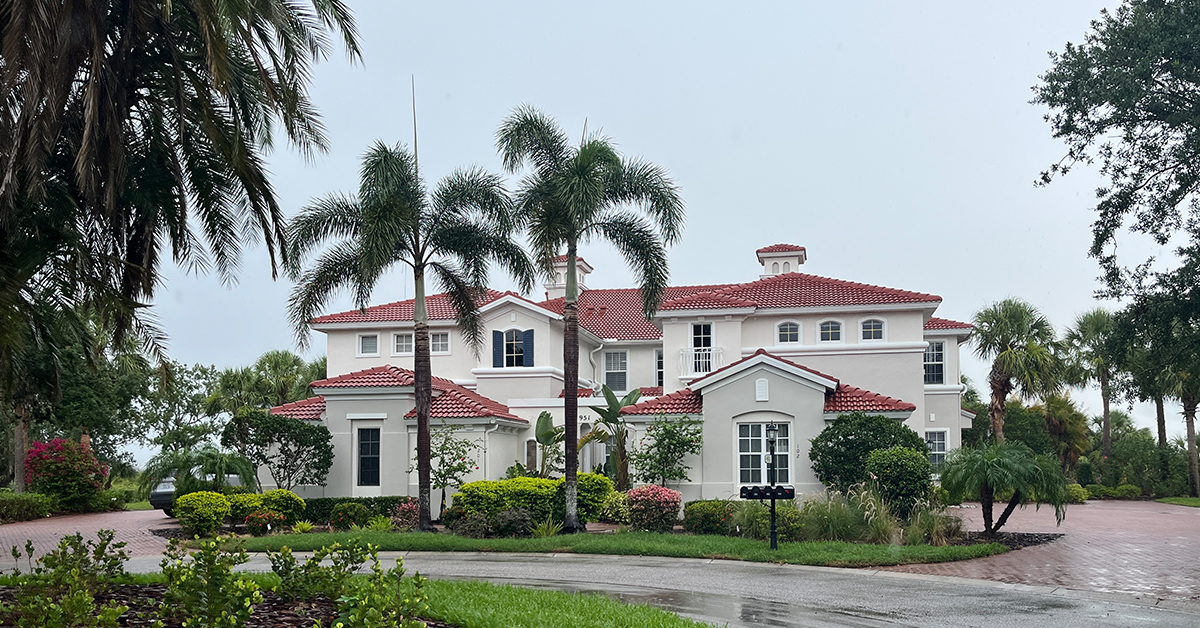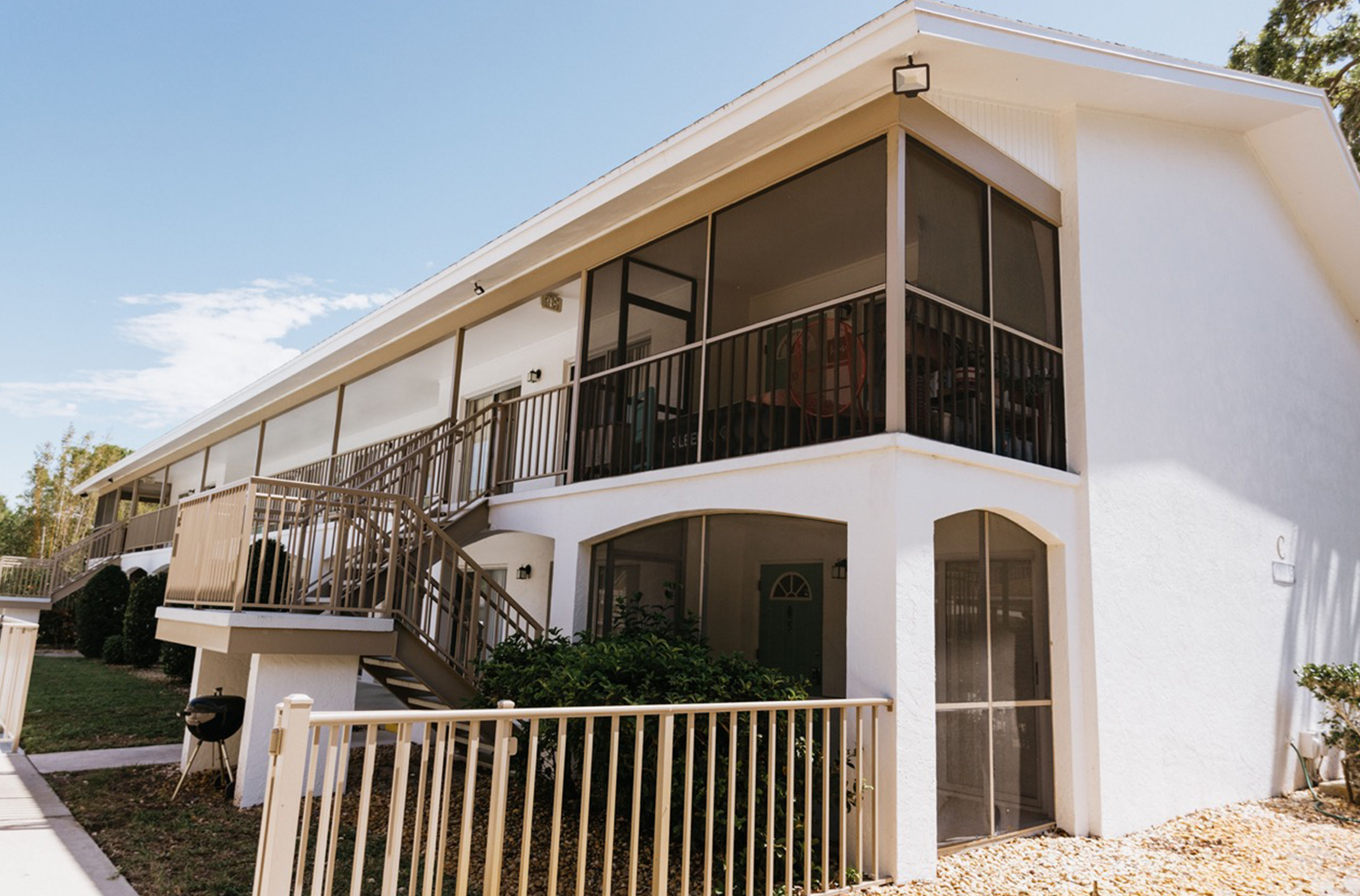

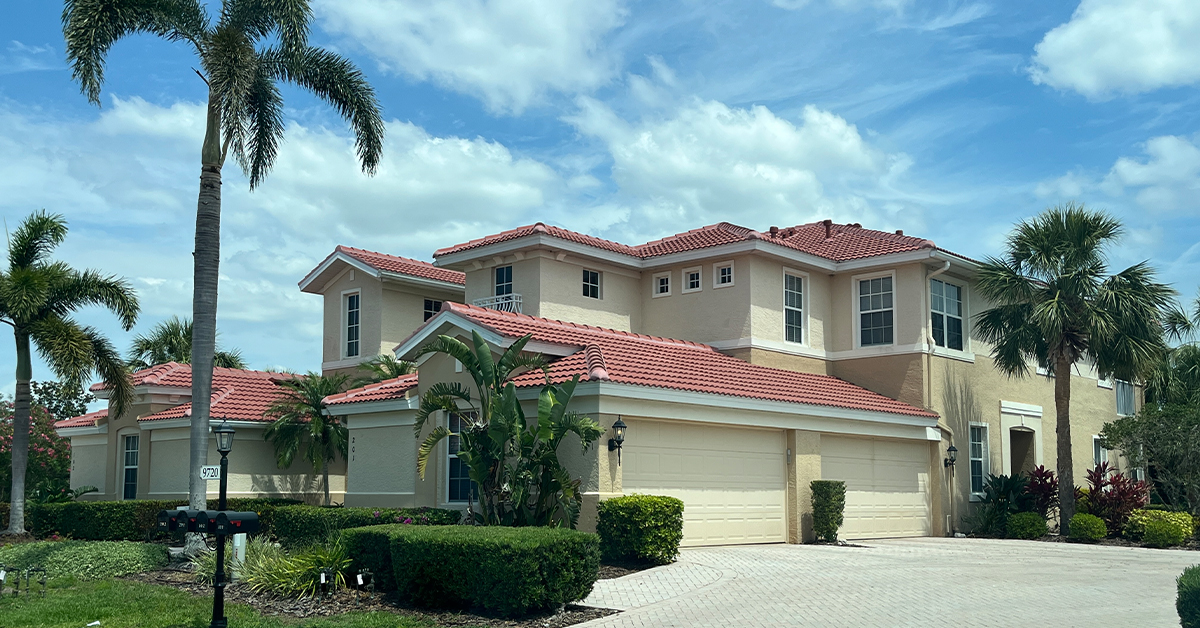
Stucco painting in Sarasota comes down to three things done right: repairing hairline cracks before you paint, choosing between elastomeric and breathable 100% acrylic based on your stucco’s condition, and using a primer or sealer suited to Florida’s humidity. Skip the prep and even premium paint fails early.
Stucco is everywhere in Sarasota and Bradenton, and it’s a great cladding for our climate — but it moves, cracks, and holds moisture in ways that wood and siding don’t. Here’s what a proper stucco paint job actually involves.
Why Florida Stucco Cracks
Stucco is a rigid cement-based coating applied over a frame that expands and contracts with heat, humidity, and settling. That constant flexing produces the fine, spiderweb-like hairline cracks you see on most stucco homes after a few years, especially around windows, corners, and control joints.
Left alone, hairline cracks let water in behind the stucco. In a state with Sarasota’s humidity and a June-through-September rainy season, trapped moisture is what eventually causes bigger problems — soft spots, staining, and stucco that separates from the substrate.
Prep Steps That Actually Matter
A proper stucco repaint starts with a pressure wash to remove chalk, mildew, and loose debris, followed by a close inspection for cracks, delamination, and any soft or hollow-sounding areas. Hairline cracks get filled with a flexible masonry patching compound, not just bridged with thick paint, since paint alone will crack again the moment the stucco moves.
Stucco home in Sarasota or Bradenton? We repair hairline cracks before we paint — and guarantee the work for 5 years.
Elastomeric vs. 100% Acrylic: Which One Do You Need?
This is the question we hear most on stucco jobs. Elastomeric coatings are thick and rubber-like, built to bridge hairline cracks and stretch with the stucco as it moves — a strong choice for older stucco with a history of cracking, or homes exposed to driving wind-driven rain.
Breathable 100% acrylic paint is thinner and lets trapped moisture escape through the stucco rather than sealing it in, which matters on homes where moisture is already a concern or where a previous coating trapped water. Our full breakdown of exterior paint types for Sarasota’s climate covers both in more depth. The right call depends on your stucco’s age, crack pattern, and moisture history, not a one-size-fits-all rule.
Primers and Sealers
Bare or heavily repaired stucco needs a masonry primer or sealer before the topcoat, both to help the finish coat adhere evenly and to even out how porous, patched, and unpatched stucco absorbs paint. Skipping the primer on repaired sections is a common shortcut that shows up later as flashing or uneven sheen where patches were made.
What Drives the Cost of Stucco Painting
Stucco projects are priced by square footage, but the number moves a lot based on how much crack repair is needed, whether elastomeric or standard acrylic is specified, home height and access, and how many coats the existing surface needs to look even. Every stucco project should be quoted after a free on-site estimate, since two houses of the same size can need very different amounts of repair work.
Ongoing maintenance is simple: rinse the stucco periodically to keep salt and pollen from building up, and address any new hairline cracks while they’re small rather than waiting for the next full repaint.
Signs Your Stucco Needs Attention Now
A few warning signs mean it’s worth scheduling an inspection sooner rather than later, before a routine repaint turns into a bigger repair:
- Cracks wider than a hairline, or cracks that have grown in the last year
- Soft or hollow-sounding spots when you tap the stucco
- Bubbling, peeling, or a chalky film that rubs off on your hand
- Dark staining or streaking, especially below windows and rooflines
- Visible gaps around windows, doors, or where stucco meets trim
Catching these early keeps a stucco project a paint job instead of a structural repair. Our team flags any of these during the free estimate so there are no surprises once work begins.
Frequently Asked Questions
What’s involved in stucco painting in Sarasota?
Stucco painting starts with pressure washing and crack repair, followed by a primer or sealer and a topcoat of either elastomeric or breathable 100% acrylic paint, chosen based on your stucco’s crack history and moisture condition. Skipping repair or primer steps is the most common reason stucco paint jobs fail early.
Is elastomeric or acrylic paint better for stucco in Florida?
Elastomeric is better for stucco with a history of cracking since it bridges hairline cracks and flexes with the wall, while breathable 100% acrylic is often preferred where trapped moisture is a concern, since it lets the wall breathe. A painter should assess your stucco’s condition before recommending one.
How do you fix hairline cracks in stucco before painting?
Hairline cracks are cleaned out and filled with a flexible masonry patching compound designed to move with the stucco, then sanded smooth and primed before painting. Filling with regular caulk or paint alone usually fails within a year because it can’t handle the stucco’s natural expansion and contraction.
Stucco Painting in Sarasota: Get It Done Right
Stucco is not a surface where shortcuts pay off — the crack you don’t fix today is the water stain you’re dealing with in two years. A Step Above Painting repairs hairline cracks and prepares stucco properly before any topcoat goes on, backed by our 5-year guarantee on residential painting work. Estimates are free and on-site, with no obligation. Call (941) 404-9372 or request an estimate below.
Stucco home in Sarasota or Bradenton? We repair hairline cracks before we paint — and guarantee the work for 5 years.