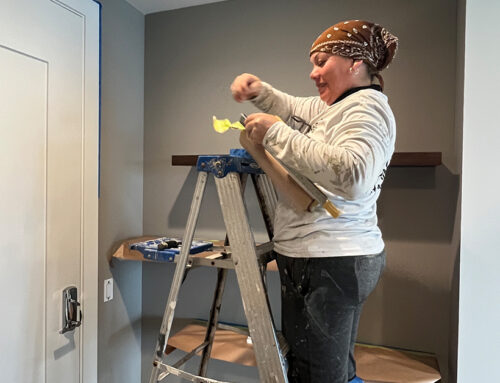

Yes — professional painters wash walls before painting whenever there is grease, grime, smoke residue, or mildew on the surface, because paint will not bond properly to a dirty wall. Not every wall needs a full wash, but pros know which rooms do and which steps to skip only at their own risk. Here is when washing matters, how it is done, and why it makes a real difference in a humid climate like Sarasota’s.
When Washing Walls Is Actually Necessary
Kitchens are the most obvious case — cooking leaves a thin film of grease on nearby walls and ceilings that repels paint if it is not removed first. Bathrooms are a close second, especially in Florida, where humidity feeds mildew growth around showers, tubs, and poorly ventilated corners. Homes with a smoking history need walls washed to cut through nicotine residue, which otherwise bleeds through fresh paint. And any wall with visible mildew spotting — common on north-facing exterior walls or rooms with weak airflow — needs to be washed and treated before a brush ever touches it.
A bedroom or hallway with no visible dirt, grease, or staining usually needs nothing more than a light dusting, and a full wash there would just add time without improving the outcome. Knowing which rooms fall into which category is part of the walkthrough a painter does before ever opening a can.
Methods Pros Actually Use
The cleaning method depends on what is on the wall:
- TSP substitute (trisodium phosphate-free cleaner): the standard choice for cutting grease and prepping glossy trim for a fresh coat — it cleans and slightly dulls the surface so new paint grips.
- Mild degreaser: used in kitchens and around light switches or door frames where hand oils and cooking residue build up.
- Diluted vinegar solution: a gentler option for light dust and general grime on walls that are not heavily soiled, often followed by a plain water rinse.
- Mildew treatment: a bleach-water solution or dedicated mildew cleaner on any spotted areas, always rinsed thoroughly before paint goes on.
Prefer to skip the prep? Our Sarasota crew handles washing, patching and priming on every interior job.
Drying Time Before You Paint
Walls need to be fully dry before priming or painting — trapped moisture under a fresh coat is a common cause of bubbling and poor adhesion. In Sarasota’s humidity, that can mean allowing more drying time than a label suggests, especially in bathrooms or rooms without strong air circulation. Running the AC or a fan for a few hours after washing speeds things up considerably and is standard practice on our jobs.
A simple touch test helps — a wall that still feels cool or slightly damp to the back of your hand needs more time, even if it looks dry. This is one of the small judgment calls that separates a rushed weekend job from one that holds up for years.
The Full Prep Order: Wash, Patch, Sand, Prime
Washing is one step in a sequence that pros follow in order. First, wash and let the surface dry completely. Next, patch any holes, dents, or cracks with spackle or joint compound. Once patches are dry, sand them smooth and knock down any texture that would show through the finish coat. Then prime — especially over patches, stains, or any area that was heavily cleaned — before the finish coats go on. Skipping or reordering these steps is one of the most common reasons a DIY paint job looks uneven or starts failing early. For a full breakdown of what your home might need, our residential painting page covers the complete process.
What Pros Do Differently From a DIY Job
The biggest difference is not the cleaner — it is knowing which walls actually need it and which don’t. A pro can look at a room and tell within a minute whether it needs a full wash, a quick wipe-down, or nothing at all, which saves time without cutting corners where it matters. Pros also know how to treat mildew so it does not simply grow back under the new paint, and they build drying time for humidity into the schedule instead of guessing. That judgment is a big part of why a professional interior repaint typically holds up longer than a rushed weekend project.
Get It Done Right the First Time
If prepping walls sounds like more work than you want to take on, that is exactly what we handle on every interior job — washing, patching, sanding, and priming, all before the first finish coat goes on. Every residential project comes with a free, no-obligation on-site estimate and our 5-year guarantee. Call (941) 404-9372 to schedule yours.
Prefer to skip the prep? Our Sarasota crew handles washing, patching and priming on every interior job.
Frequently Asked Questions
Do painters wash walls before every single job?
Not every wall needs a full wash, but pros check every room and clean where it matters — kitchens, bathrooms, and any surface with visible grime, grease, or mildew. Skipping a wash on a wall that needs it is one of the fastest ways to get peeling or uneven paint.
Can I just wipe down walls myself before a painter arrives?
You can, and a light dusting or wipe-down never hurts. But leave grease, mildew, and glossy trim to the pros — those need specific cleaners and treatment to make sure new paint actually bonds and stays bonded.
How long should walls dry after washing before painting?
Plan on at least a few hours in good airflow, and longer in humid Florida conditions or poorly ventilated rooms like bathrooms. Painting over a damp wall is one of the most common causes of adhesion failure and bubbling.