
Siesta Key, Longboat Key, and Anna Maria Island homes face the harshest paint conditions in Sarasota County — direct salt spray, wind-driven rain, and near-constant UV — so they need a different coating system and a different maintenance schedule than a home even a few miles inland. The right approach starts with acrylic or elastomeric coatings rated for coastal exposure, careful attention to metal components like pool cages and railings, and a repaint cycle closer to every four to six years instead of eight to ten.
Why Barrier Island Homes Need a Different Approach
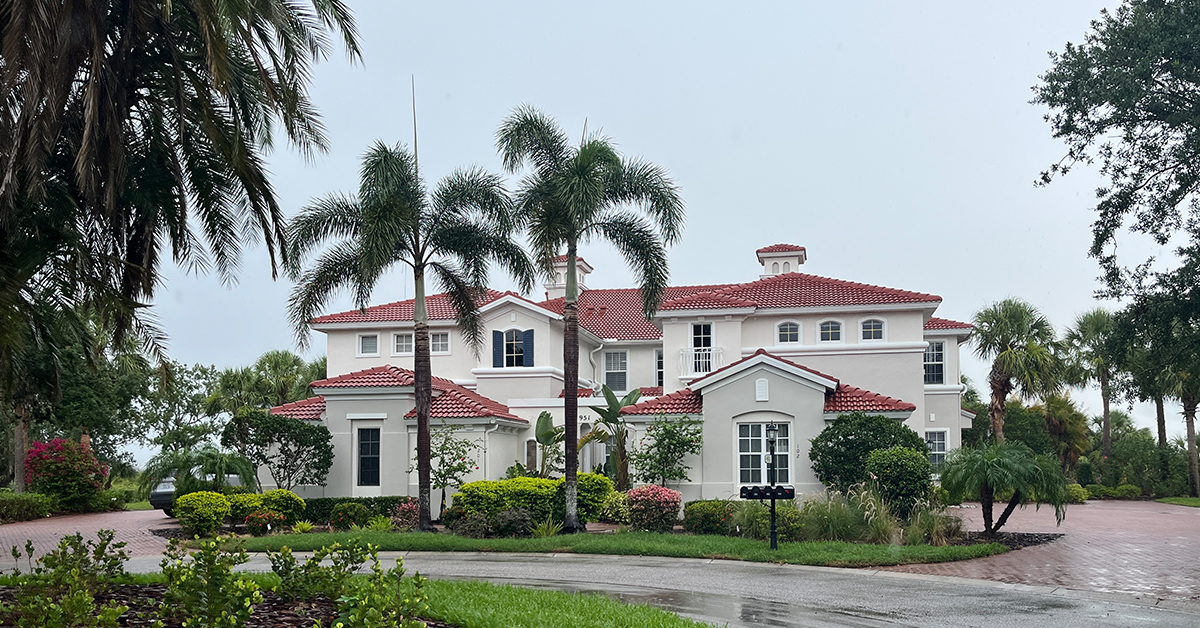
Homes directly on the Gulf or the bay take on salt exposure that inland Sarasota homes never see. Fine salt particles carried on the wind settle into paint film and accelerate breakdown, while wind-driven rain during storms and hurricane season pushes water into seams, corners, and fastener points that a standard exterior on a protected lot would never have to deal with. Add near-constant UV exposure with almost no shade on many barrier island lots, and you have a combination that ages a standard paint job years faster than the same product would age inland.
For more detail on how salt air and UV affect paint generally in our area, see our guide to exterior paint that holds up in Sarasota’s salt air — everything in that guide applies here, just at a higher intensity.
Elevated Homes, Stilt Construction & Access
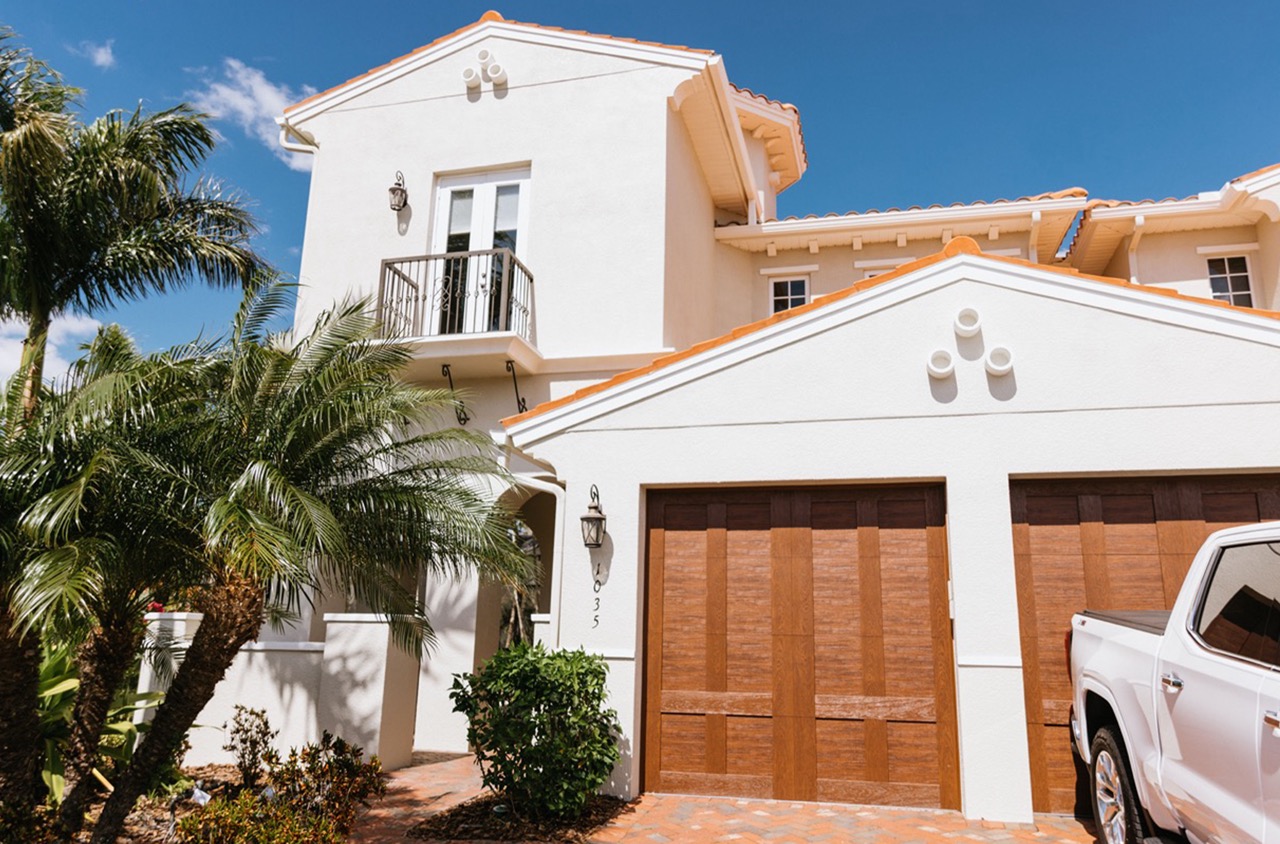
Many Siesta Key and Anna Maria Island homes are elevated on pilings or stilts, which changes the job in practical ways beyond just the paint itself. Underside surfaces, support columns, and stairways see different weather exposure than the main structure and often get overlooked in a standard repaint. Access is also a bigger factor — elevated homes, narrow island lots, and limited parking or staging space often call for specific lift equipment and careful planning before a crew even shows up with a sprayer.
Barrier-island home? We spec coatings for the harshest exposure in Sarasota County — and guarantee residential work for 5 years.
Longboat Key adds another layer with its mix of single-family homes and condo towers, where lift access and building height require experience with larger equipment and coordination with building management, not just a set of ladders.
Lanais and Pool Cages: The First Thing to Corrode
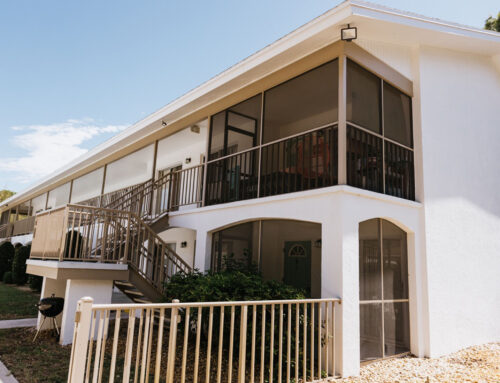
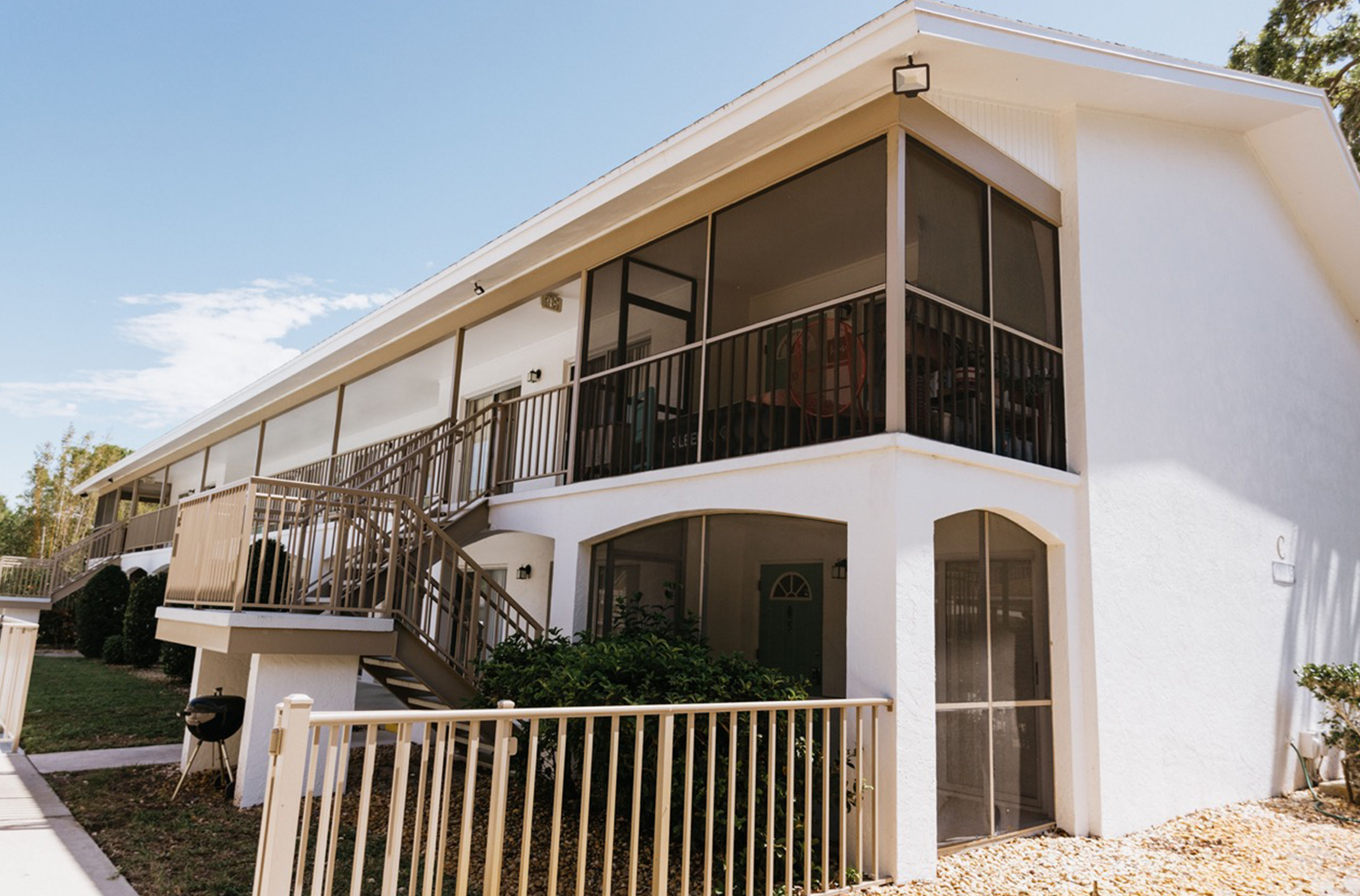
On barrier island properties, pool cages, lanai screens, and their metal framing are usually the first thing to show real wear — long before the main house siding does. Salt air accelerates corrosion on aluminum framing and fasteners, and a pool cage that looks fine from a distance often has rust bleeding through the paint at every screw and joint up close. Pool decks take a similar beating from a mix of sun, chlorine, and salt-laden moisture, and need a coating rated for both foot traffic and constant moisture exposure.
We treat lanai and pool cage painting as its own scope of work, with rust treatment and a coating system built for coastal metal, rather than an afterthought tacked onto the house exterior.
Coating Systems That Actually Hold Up
For the main structure, premium 100% acrylic latex remains the workhorse for siding and fiber cement on the islands, but it needs to be a top-tier, UV- and salt-rated product, not a mid-grade line. Stucco and block homes benefit from elastomeric coatings that bridge hairline cracking and shed wind-driven rain, which matters even more on a barrier island lot with no buffer between the house and open water. Metal components — railings, pool cages, and exterior stairs — need a rust-inhibiting primer and a coating rated for marine-adjacent corrosion, applied after any existing rust is properly treated and removed.
HOA and Condo Tower Considerations on Longboat Key
Longboat Key’s condo towers and HOA communities add scheduling and access requirements that single-family homes don’t have — building management approval, resident notification, elevator or lift access for upper floors, and often a phased schedule across multiple buildings. Color and product choices frequently need to match an approved community palette as well. Our HOA and condo painting team regularly works Longboat Key’s towers and knows the approval and access process building managers expect.
How Often to Repaint on the Islands
Because of the intensified exposure, barrier island homes generally need repainting every four to six years, compared to roughly eight to ten years for a well-protected inland Sarasota home. Watching for early signs like chalking, fading, or hairline cracking around trim and pool cage framing can help you catch problems before they turn into bigger repairs — our guide on signs it’s time to repaint covers what to watch for.
Frequently Asked Questions
How often should a Siesta Key or Longboat Key home be repainted?
Most barrier island homes need repainting every four to six years, compared to eight to ten years for a typical inland Sarasota home. Direct salt exposure, wind-driven rain, and constant UV accelerate wear on both the paint and any exposed metal.
Do pool cages and lanais need special paint?
Yes. Aluminum pool cage framing and lanai screens corrode faster in salt air and need a rust-inhibiting primer and a coating rated for coastal metal, along with treatment of any existing rust before painting. Pool decks need a separate coating rated for foot traffic and constant moisture.
Can you paint condo buildings on Longboat Key?
Yes. We regularly work with condo associations and building managers on Longboat Key, coordinating access, resident notification, and approved community color palettes as part of the project.
Protect Your Barrier Island Home
Salt air, wind-driven rain, and constant sun make Siesta Key, Longboat Key, and Anna Maria Island the toughest painting environment in our service area, and it takes the right coating system and the right crew to hold up to it. A Step Above Painting specs coatings for this exposure every day and guarantees residential work for 5 years. Call (941) 404-9372 or request a free on-site estimate.
Barrier-island home? We spec coatings for the harshest exposure in Sarasota County — and guarantee residential work for 5 years.