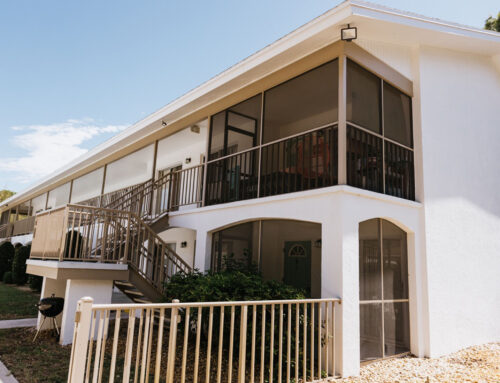

Painting a lanai, pool cage, or pool deck in Sarasota means working with aluminum, screen, and concrete that spend all day in salt air and UV, not the same surfaces as a bedroom wall. Aluminum screen frames need oxidation removed and a direct-to-metal coating, pool decks need a coating rated for slip resistance and heat, and timing the work around screen replacement can save you money.
Here’s what actually goes into a lanai, pool cage, and pool deck repaint on the Suncoast, and what to expect for cost and maintenance.
Aluminum Pool Cage and Screen Frame Painting
Most Sarasota pool cages are powder-coated or mill-finish aluminum, and after a few years of sun and salt exposure the surface starts to oxidize — that chalky, dull film you can wipe off with a finger. Paint won’t stick to oxidized aluminum, so the frame has to be cleaned and often lightly sanded or treated with a metal etching primer first.
Once the surface is prepped, a direct-to-metal (DTM) coating formulated for aluminum is applied. It bonds without a separate primer coat in most cases and holds up to coastal humidity far better than standard exterior paint. Screen panels themselves generally aren’t painted; the frame and any solid metal trim are the focus.
Lanai Ceilings and Walls
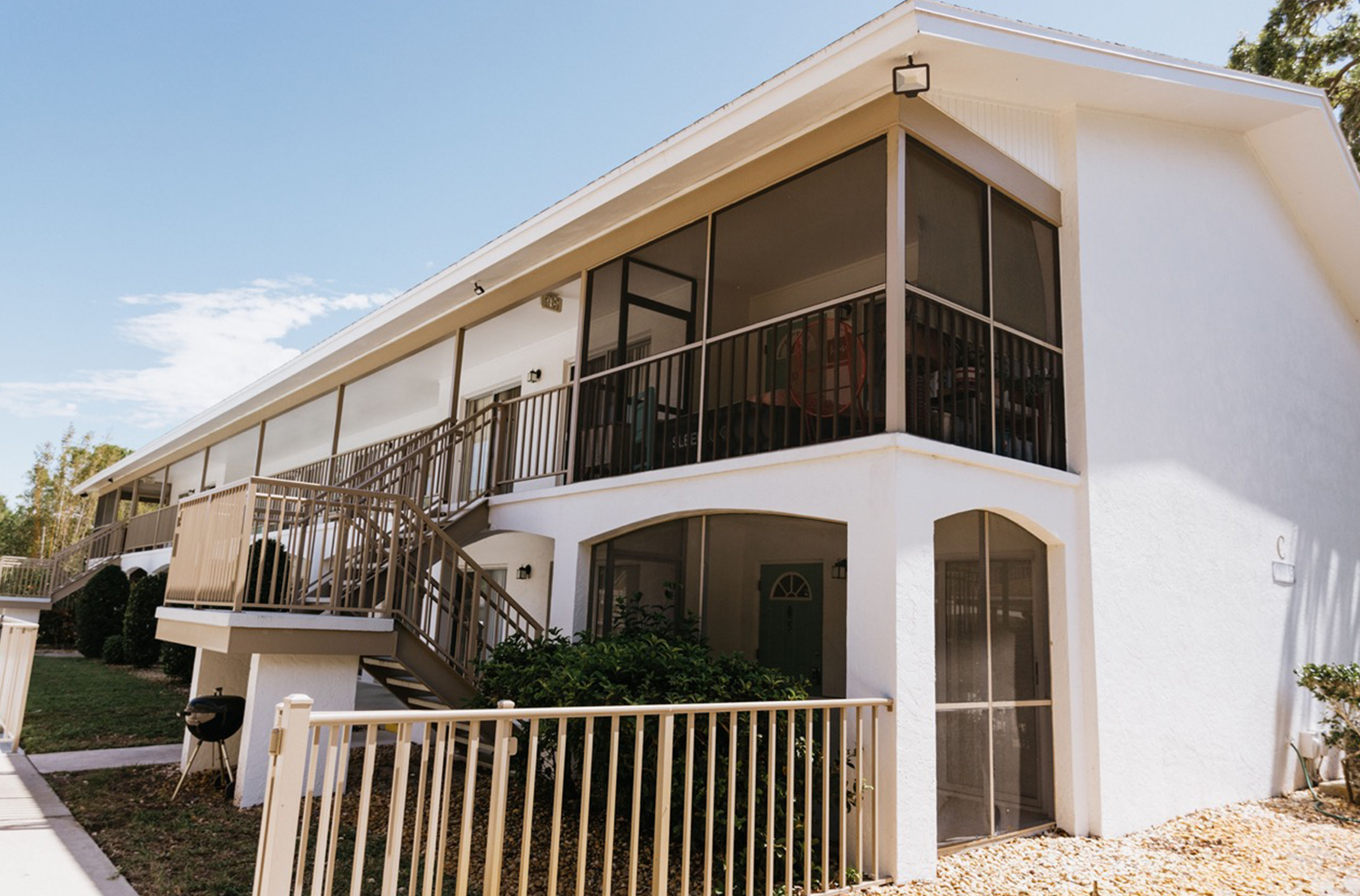
Lanai ceilings, especially screened and uncovered ones, take a beating from moisture and shade-loving mildew. A mildew-resistant exterior paint rated for masonry or stucco, depending on your ceiling material, is the right call — and it’s worth doing at the same time as the walls so everything matches.
Lanai or pool cage looking chalky? Ask our Sarasota crew about a free estimate — it’s part of our residential service.
Pool Deck Coatings: Slip Resistance and Heat
A bare or painted concrete pool deck in Florida sun gets hot enough to burn bare feet by early afternoon, and it gets slick the moment it’s wet. Cool-deck style coatings are textured and formulated to reflect heat, staying noticeably cooler underfoot than plain concrete, while also adding slip resistance around the water’s edge.
Deck coatings need sound concrete underneath — cracks and spalling should be repaired first — and they’re a different product category from wall paint entirely, so make sure whoever quotes the job has actually done pool decks, not just houses.
Timing It Around Screen Replacement
If your pool cage screens are more than 8–10 years old or showing wear, it’s worth coordinating frame painting with screen replacement rather than doing them separately. Painting the frame while the screens are out is faster and cleaner, avoids overspray risk on new screening, and most homeowners save on labor by having both done in the same visit.
Typical Cost Ranges and Salt-Air Maintenance
Pool cage and lanai painting is priced by the linear or square footage of frame and by deck square footage, and every project should be quoted after a free on-site estimate since cage size, screen condition, and deck square footage vary widely from home to home. Homes within a mile or two of the water — areas hit hardest by salt air like Siesta Key and Longboat Key — should plan on more frequent rinsing of the frame and deck to slow oxidation between repaints.
A simple habit that extends the life of any coastal coating: hose down aluminum frames and pool decks every few weeks to rinse off salt residue before it has a chance to sit and corrode.
What to Ask Before Hiring for Pool Cage Painting
Not every painting company works on aluminum and pool decks regularly, so it’s worth asking a few pointed questions before you hire one for a lanai or pool cage project:
- Do you use a direct-to-metal coating rated for aluminum, or a standard exterior paint?
- How do you handle oxidized aluminum before painting?
- Is the pool deck coating rated for slip resistance and foot traffic?
- Can you coordinate the schedule around screen replacement if we need it?
- What’s included if the coating fails early near the coast?
Vague answers, or a quote that treats the frame the same as a stucco wall, are signs to keep looking. This kind of work is a specialty within exterior painting, and it should be treated that way in the estimate.
Frequently Asked Questions
How much does lanai and pool cage painting cost in Sarasota?
Pricing depends on the size of the frame, screen condition, and pool deck square footage, so every project should be quoted after a free on-site estimate. Aluminum frame painting and pool deck coatings are priced separately, and combining both with screen replacement often saves on labor.
Can you paint an aluminum pool cage without replacing the screens?
Yes, frame painting can be done with screens in place, though removing them first gives a cleaner result and is worth considering if your screens are already due for replacement. Either way, oxidized aluminum needs to be properly cleaned and primed before a direct-to-metal coating is applied.
What paint holds up best on a Sarasota pool deck?
Textured, cool-deck style acrylic coatings formulated for concrete pool decks hold up best, since they’re built for constant water exposure, UV, and foot traffic while also improving slip resistance and reducing surface heat. Standard exterior wall paint isn’t rated for this kind of wear and shouldn’t be used on decks.
Lanai and Pool Cage Painting in Sarasota: Get Your Free Estimate
Lanai, pool cage, and pool deck work is part of our standard residential painting service in Sarasota and Manatee County, and every estimate is free with no obligation. Residential work is backed by our 5-year guarantee, so the coating is built to last in this climate, not just look good on day one. Call (941) 404-9372 or request your estimate below.
Lanai or pool cage looking chalky? Ask our Sarasota crew about a free estimate — it’s part of our residential service.