
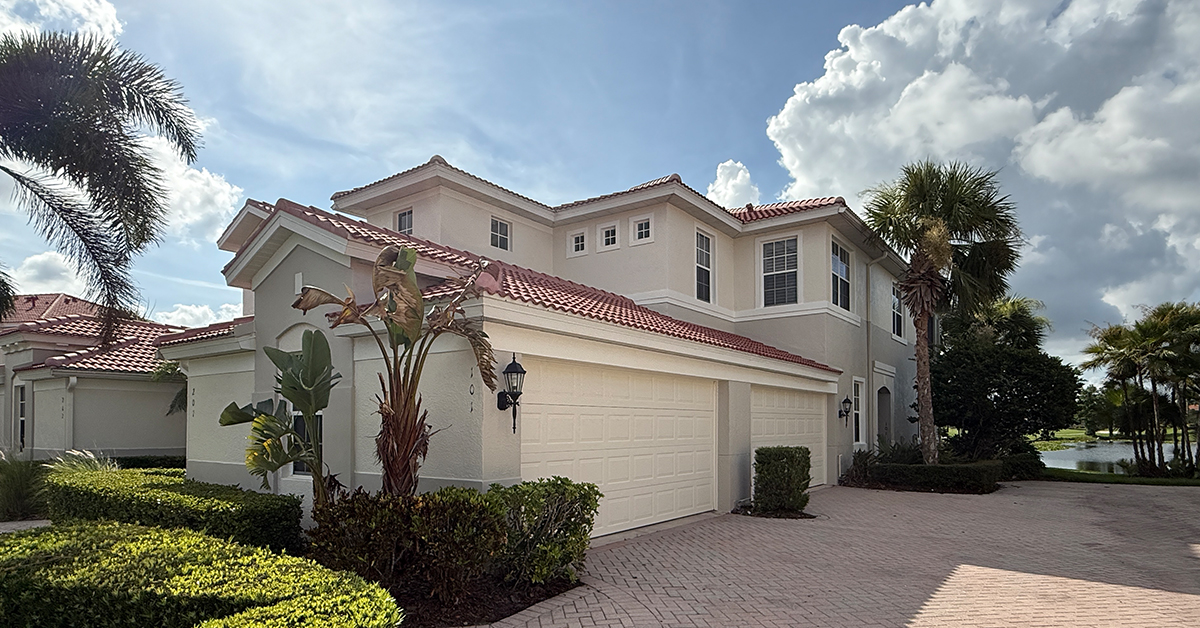
A paint maintenance program is a scheduled annual inspection and touch-up plan that catches small problems — cracked caulk, mildew, fading, rust — before they turn into a full repaint. For Sarasota HOAs and commercial properties, a good program can stretch the time between full repaints from the typical 5–7 years to 8–10 years, saving significant money over the life of a building. Here is what belongs in the checklist and how to budget for it.
Why Community and Commercial Buildings Need a Program
Florida’s climate is hard on exterior paint. Salt air, intense UV, summer humidity, and hurricane-season rain all attack a paint film continuously, and a large property has a lot of surface area for problems to hide in. Boards and property managers who wait for an obvious failure — peeling siding, streaked stucco, rusted railings — end up paying for a full repaint sooner and more often than they need to. A maintenance program catches the small stuff annually so the big stuff never happens.
This matters just as much for commercial properties — offices, retail centers, restaurants, and warehouses — where a tired-looking exterior can affect how tenants, customers, and patients perceive the business inside. A documented annual program gives ownership a clear record of condition and spend, which is useful both for budgeting and for demonstrating due diligence to lenders or insurers.
The Annual Inspection Checklist
A thorough inspection walks the entire property, building by building, and looks for:
- Caulk and sealant joints around windows, doors, and trim — Florida heat and moisture cycles break caulk down faster than in most climates.
- Hairline cracks in stucco, which can let water behind the paint film if left unaddressed.
- Mildew and algae growth, especially on shaded, north-facing walls and anywhere irrigation overspray keeps a surface damp.
- Fading and chalking on south- and west-facing elevations that take the most sun.
- Rust on railings, gates, and metal fixtures, particularly near the coast where salt air accelerates corrosion.
- Door and trim wear around high-touch areas like entryways, mailboxes, and clubhouse doors.
Ask about a paint maintenance program for your community or commercial property — we inspect, touch up and document every year.
Pressure-Washing Cadence
Most Sarasota and Manatee County communities benefit from a pressure wash once or twice a year, more often on buildings near the water where salt residue builds up fast. Washing removes the mildew, pollen, and grime that eat away at a paint film over time and is one of the cheapest things a property can do to protect its investment between repaints.
Touch-Up Cycles and What They Cover
A well-run program schedules touch-ups on a rolling basis — often annually for high-wear areas like railings, doors, and ground-floor walls, and every two to three years for the broader building exteriors. Touch-ups handle small chips, scuffs, and early fading before they spread, and they are far cheaper than letting an entire elevation degrade to the point where it needs a full recoat.
Documentation matters here as much as the work itself. A good program keeps photos and notes from each visit so the board or property manager can see exactly what was found, what was addressed, and what to watch heading into the next cycle — useful both for planning next year’s budget and for handing off information cleanly if property management changes.
Budgeting and Reserve Planning
Boards budgeting for paint should treat it like any other reserve item: a known, recurring cost rather than a surprise special assessment. A maintenance program smooths that cost out — instead of one large capital expense every five to seven years, the community pays a smaller, predictable annual amount for inspection and touch-ups, with full repaints spaced further apart. That is easier to plan into a reserve study and easier for boards to justify to residents. Our HOA painting team can help estimate both approaches side by side so your board can see the real numbers.
How Maintenance Programs Extend Repaint Cycles
The math is straightforward: paint fails from the edges in. Cracked caulk lets water behind trim, chipped paint exposes bare substrate to UV, and untreated mildew breaks down the paint film from the surface. Address each of those early and consistently, and the main paint film keeps doing its job years longer. Properties on a documented annual program in our area regularly stretch a 5–7 year repaint cycle to 8–10 years, which on a large community can defer hundreds of thousands of dollars in capital spending. See examples of the work in our portfolio.
Set Up a Program for Your Property
If you manage an HOA, condo association, or commercial property in Sarasota or Manatee County, a paint maintenance program is one of the most cost-effective things you can put in place. We offer free, no-obligation on-site assessments to show you exactly what a program would look like for your buildings, and our commercial work carries full material and labor warranties, typically 7–10 years. Call (941) 404-9372 to schedule a walkthrough.
Ask about a paint maintenance program for your community or commercial property — we inspect, touch up and document every year.
Frequently Asked Questions
How much does a paint maintenance program cost?
Cost depends on property size, number of buildings, and scope of touch-up work needed each year — it is typically a fraction of a full repaint. We provide a detailed quote after a free on-site assessment so your board can compare it against traditional repaint-only budgeting.
How often should an HOA inspect its paint?
An annual walkthrough is the standard for most Sarasota communities, with a more frequent check on buildings closest to the water where salt air and UV cause faster wear. Some properties add a mid-year spot check after hurricane season.
Does a maintenance program replace the need for a full repaint eventually?
No — it delays it. A good program extends the interval between full repaints, often from 5–7 years to 8–10 years, but every paint film eventually needs a complete recoat. The program’s job is to get you there on the longest, most cost-effective timeline possible.